
Patient engagement software is a technology platform that helps healthcare organizations communicate with patients, schedule appointments, close care gaps, and manage intake workflows. It creates structured touchpoints between providers and patients so that care coordination happens consistently rather than reactively.
But not all patient engagement software is the same. There is a meaningful difference between bolt-on engagement modules that live inside an EHR and purpose-built patient engagement platforms designed from the ground up to serve that specific function. Understanding that difference is what helps healthcare organizations make the right investment.
What Does Patient Engagement Software Actually Do?
At its core, patient engagement software automates the communication and coordination work that staff would otherwise handle manually. This includes outreach campaigns targeting specific patient populations, appointment reminders, post-visit follow-up, intake collection, care gap identification, and feedback collection.
Modern platforms like HealthTalk A.I. go further by using agentic AI to handle these workflows without requiring staff to initiate each step. The platform automates engagement, scheduling, and intake within a single system, allowing clinical staff to focus on patient care rather than administrative follow-up.
The Three Core Functions to Look For
When evaluating any patient engagement platform, look for these three capabilities working together:
Population Engagement: The ability to identify specific patient cohorts and reach out at scale based on care gaps, chronic conditions, or appointment history. This is how organizations move from reactive care to proactive outreach.
AI Scheduling: The ability to convert outreach into booked appointments automatically, without requiring a phone call to complete the loop. Patients receive a message and can self-schedule directly from their device.
Digital Intake: The ability to collect patient information before the visit through mobile-friendly forms, reducing wait times and removing the paper clipboard from the check-in process.
Purpose-Built vs. EHR Bolt-On: Why It Matters
This is where many healthcare organizations get stuck. Most EHR systems offer some level of patient communication functionality, typically appointment reminders and a basic patient portal. These tools are built to support the EHR, not to serve as a comprehensive engagement layer.
Purpose-built platforms are architected differently. They are designed to integrate with your EHR while handling all the engagement logic, scheduling automation, and intake workflows independently. This means your clinical team gets the full benefit of both systems without the limitations of one.
HealthTalk A.I. integrates with EHR systems like athenahealth and Meditech Expanse while operating as a standalone engagement engine. Organizations using it have been able to consolidate tools they previously ran separately, including outreach, scheduling, and patient intake, into one platform.
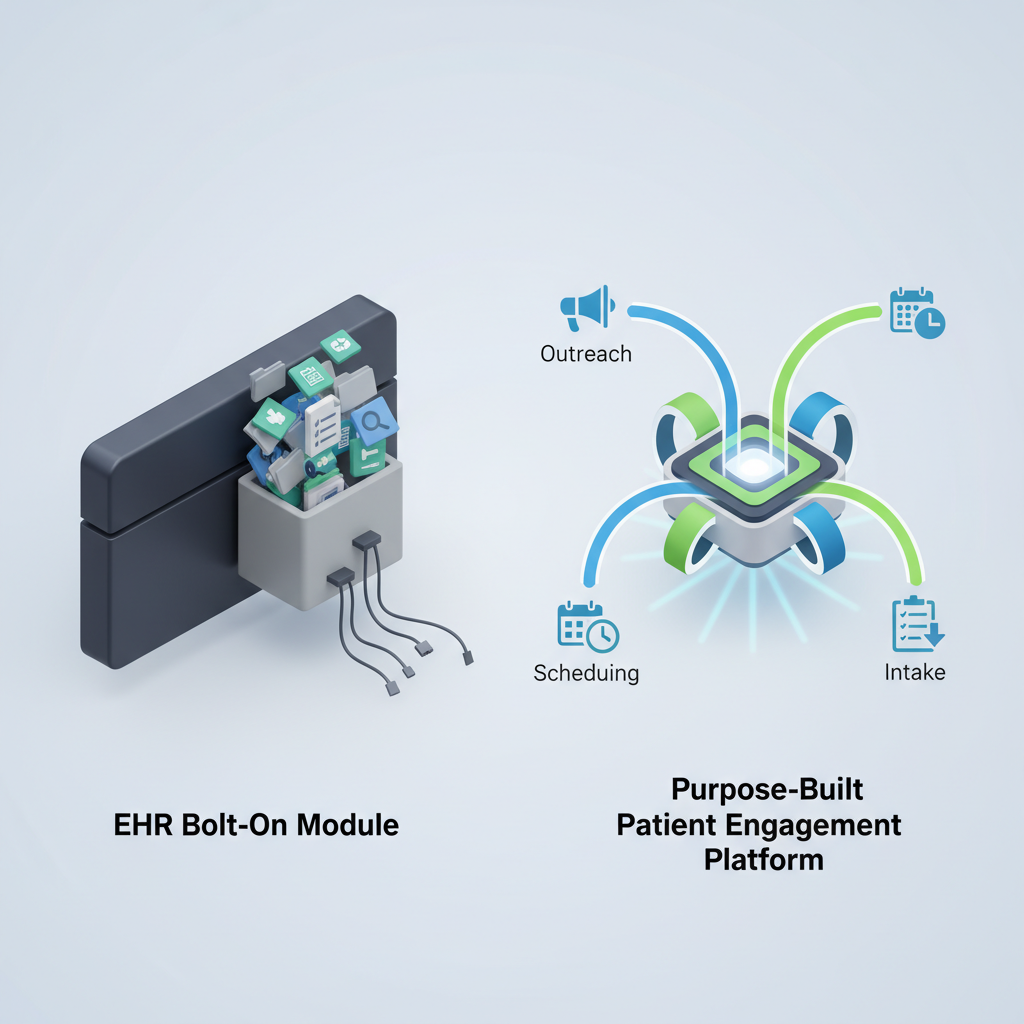
This consolidation matters for several reasons. It eliminates communication gaps that happen when systems don’t talk to each other. It reduces the administrative burden on staff who would otherwise toggle between multiple tools. It removes patient confusion that comes from receiving messages from multiple systems with different branding and different reply instructions. And it lowers cost by replacing multiple vendor contracts with a single platform.
Many healthcare organizations don’t realize they are running three or four separate tools to accomplish what a purpose-built engagement platform handles in one. Consolidating those workflows reduces staff workload, improves the patient experience, and lowers total cost of ownership at the same time.
Who Uses Patient Engagement Software?
Patient engagement software is used across virtually every care setting. FQHCs and RHCs use it to manage high-volume outreach for underserved populations. Hospitals use it to reduce readmissions by automating post-discharge follow-up. Ambulatory care practices use it to keep schedules full and reduce the number of patients who fall through the cracks between visits.
HealthTalk A.I. works across all of these settings, with client results documented from community health centers, rural health systems, and multi-site health organizations.
What to Look for When Evaluating a Patient Engagement Platform
Not every platform delivers on its promises. Here are the questions worth asking during any evaluation:
- Does the platform integrate with your existing EHR, or does it require a separate workflow?
- Can it handle outreach, scheduling, and intake in a single system?
- Is it HIPAA compliant, and how is that compliance certified and maintained?
- Does the vendor have documented results from organizations similar to yours?
- How much staff time is required to manage campaigns after implementation?
Purpose-built platforms designed specifically for patient engagement tend to perform better on all five of these dimensions.
Frequently Asked Questions
Is patient engagement software the same as a patient portal?
How does patient engagement software integrate with EHR systems?
What is the difference between patient engagement and patient experience?
HealthTalk A.I. is a purpose-built patient engagement platform used by primary care practices such as RHCs and FQHCs, multi-speciality groups, ambulatory care organizations, and health systems to automate engagement, scheduling, and intake. Learn more at healthtalkai.com.