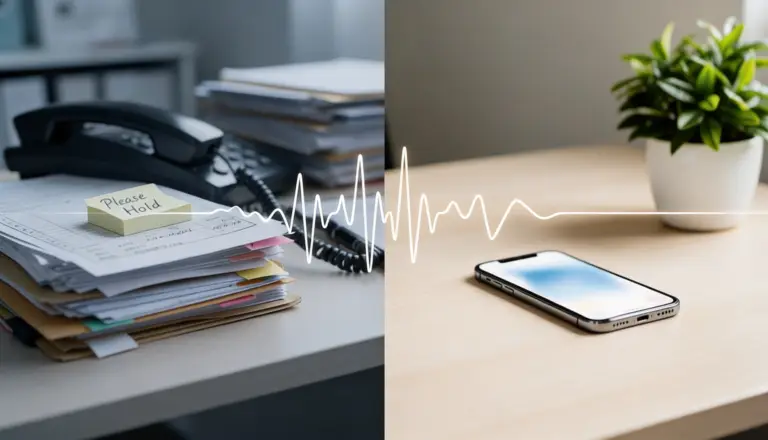
Improving access, continuity, and clinic productivity through evidence-aligned patient outreach and operational workflows.
Prepared by: Jen Calohan, COO HealthTalk A.I.
Audience: Rural Health Clinics (RHCs) and Federally Qualified Health Centers (FQHCs)
Executive Summary
Rural Health Clinics (RHCs) and Federally Qualified Health Centers (FQHCs) face persistent challenges related to missed appointments, late cancellations, and under-filled schedules. All issues that directly negatively impact access to care, disrupt continuity, and threaten financial sustainability.
A substantial body of evidence demonstrates that digital appointment reminders, including those delivered via text, improve overall patient attendance. Notably, a large randomized controlled trial in primary care found that the use of two reminders outperforms the use of just one; with the strongest and simplest pattern being outreach at approximately three days and 24 hours prior to the visit. Importantly, this approach reduced missed appointments without negatively impacting patients’ reported level of satisfaction.
However, achieving consistently high schedule fill rates (≥85%) and reducing late cancellations within 24 hours of the visit requires more than reminders alone. While the outreach cadence creates opportunity, the true operational lift comes from a well-designed “conversion engine” – one that rapidly converts patient responses into rescheduled appointments and efficiently backfills newly opened slots using automation and defined workflows.
1. The Problem: Missed Visits Are a Two-Part Operational Failure
Missed appointments generally occur for two distinct reasons:
- First, they may result from forgetfulness or the presence of barriers to care, which are typically classified as medical or non-medical in nature. These factors are most effectively addressed in close proximity to the scheduled appointment.
- Second, schedule conflicts or a reduced perceived need, which must be identified early enough to allow rescheduling and backfilling.
- Approximately 30% of rescheduled appointment slots will be backfilled and 25% of canceled appointment slots will be backfilled, preserving both access and revenue.
An effective reminder strategy must therefore serve two complementary purposes:
- Reduce no-shows through ‘near-term’ reminders
- Pull cancellations forward to enable proactive rescheduling and waitlist utilization
2. What the Evidence Says About Number and Timing:
Two Reminders Beat One
A large randomized primary care trial involving more than 54,000 patients compared three approaches:
- One reminder only – sent three days prior
- One reminder only – sent one day prior
- Two reminders – the first sent three days prior, the second sent one day prior
The group that received 2 reminders achieved the lowest missed appointment rate and did so without a negative impact to patient satisfaction.
Operational implications:
- The three-day reminder creates sufficient time for cancellations, rescheduling, and backfilling
- The 24-hour reminder addresses forgetfulness and allows time to address next-day logistical / non-medical barriers to care (such as transportation, etc.)
A Reminder ~5 Days Out Can Improve Outcomes – and Message Design Matters
Randomized trials also demonstrated that SMS reminders sent approximately five days in advance can support reduction in missed visits, particularly when messages include clear, low-friction calls to action.
Operational implication: A 3 – 7 day outreach window can be especially helpful for identifying schedule conflicts early and supporting proactive rescheduling, particularly when patients can act immediately from the within the message.
SMS Improves Attendance Across Studies – Timing Is Not “Magic”
Systematic reviews and meta-analyses consistently show that text reminders improve attendance compared with no reminder at all. While individual studies vary in timing (24, 48, 72+ hours), the broader evidence suggests that workflow design and bidirectional action often matter more than precise timing differences.
Practical conclusion: Anchor on the evidence-supported 3-day + 24-hour backbone, and drive additional gains through bidirectional workflows and operational execution.
Post–Missed Appointment Outreach Re-Engages Patients
Evidence also supports outreach after a missed visit. One randomized study found that outreach sent within one business day of a no-show increased follow-up attendance within 30 days.
Operational implication: Missed visits should trigger a standardized automated recovery workflow, rather than allowing patients to fall out of care.
3. Recommended Outreach Cadence
Quick Overview: For RHC / FQHC Primary Care: Recommendation is ≤3-Month Lead Time, Bidirectional Multilingual Text-Based Outreach
Core Cadence (Most Visits)
- At scheduling (immediate): Confirm / Reschedule / Cancel + visit preparation Purpose: Validate contact information, confirm intent, set expectations
- 7 days prior: Confirm / Reschedule / Cancel (+ optional earlier-slot offer) Purpose: Reduce late cancellations and begin feeding the waitlist
- 3 days prior: Confirm / Reschedule / Cancel Purpose: Evidence-aligned proactive change window
- 24 hours prior: Confirm / Reschedule / Cancel + logistics Purpose: Reduce “forgotten” no-shows and surface barriers
Targeted Add-On for High-Risk Patients
- 2 – 4 hours prior to appointment time – day of care: Logistics-only nudge Purpose: Last-minute support without increasing fatigue for all patients
Minimum Viable Cadence
- 3 days prior + 24 hours prior (the most pragmatic, evidence-supported simple pattern)
4. The Conversion Engine: Why Fill Rate and <24-Hour Cancellations Require Intentional Workflow Design
While reminders reduce no-shows, consistently achieving ≥85% fill rates and minimizing late cancellations depends on what happens after the patient responds.
Required Operational Capabilities
- Real-time bidirectional response handling
- Rapid rescheduling (automated options or immediate callback queues)
- Immediate waitlist activation when slots open
- Short hold windows for open slots
- Language-matched messaging to support cultural competence, health equity and promote highest possible response rates
Automation Rules to Prevent Staff Overload
- Confirm: Auto-close, no staff intervention
- Reschedule: Auto-offer top three options; escalate if unresolved
- Cancel (>24 hours): Trigger immediate waitlist outreach
- Cancel (<24 hours): Trigger rapid-fill outreach to high-likelihood patients
- HELP keyword: Route to barrier-specific workflows (transport, directions, cost, access)
5. KPI Model and Measurement Plan
Weekly Metrics
- Scheduled visits
- Completion rate
- No-show rate
- <24-hour cancellation rate
- Missed visits by type
- Fill rate
- Median time to reschedule
- Backfill rate
- Equity stratification (language, age, visit type, site)
Simple ROI Illustration
For every 1,000 scheduled visits per month:
- Each 1-point reduction in no-shows ≈ +10 completed visits
- Each 10 additional backfilled slots ≈ +1 point fill rate improvement
6. Evidence-Based Message Library
HealthTalk A.I. maintains a library of standardized, evidence-based outreach messages designed to support appointment reminders, proactive rescheduling, waitlist activation, and post–missed visit re-engagement.
These messages are:
- Clinically and operationally informed
- Bidirectional, enabling patients to confirm, reschedule, or cancel with minimal friction
- Language-ready, supporting multilingual populations
- Designed to align with best practices in outreach timing, patient engagement, and workflow efficiency
Message content is continuously refined based on:
- Peer-reviewed evidence
- Real-world operational performance
- Client and care-team feedback
Health centers may deploy standardized messages as-is or tailor them to their organizational workflows and patient populations, while preserving evidence-aligned structure and intent.
For additional details on available message templates, configuration options, or customization support, please contact your HealthTalk A.I. Client Success Representative.
Conclusion
For RHCs and FQHCs, the strongest evidence supports a two-touch reminder backbone at approximately three days and 24 hours prior to the visit. Achieving broader operational goals – such as reducing <24-hour cancellations and maintaining fill rates ≥85%, requires earlier outreach combined with a disciplined ‘conversion engine’ that rapidly translates patient responses into reschedules and backfills.
Together, an evidence-aligned cadence and efficient operational workflow improve access, continuity, and clinic productivity.
Evidence Base
This white paper synthesizes findings from peer-reviewed randomized controlled trials, systematic reviews, and applied operational experience in primary care settings, including federally funded health centers. Key sources include large-scale primary care reminder trials, systematic reviews of SMS-based appointment reminders, and studies on post–missed-visit re-engagement. (Formal references available upon request.)
Disclaimer: This white paper is provided for informational purposes only and does not constitute legal, regulatory, clinical, or financial advice. Organizations should evaluate operational strategies based on their specific workflows, patient populations, and regulatory requirements.
To learn how HealthTalk A.I. can help you create your “conversion engine,” contact HealthTalk A.I. COO, Jen Calohan RN, TQMP, SOLC, LSSBB – jen@healthtalkai.com